Vocera Communications
ProductsSolutionsNews & EventsPartnersCustomersAbout
  • About Our Solutions
  • Healthcare
  • Retail
  • Hospitality
  • Libraries
  • Third-Party
  • Complete ROI Report
  • St. Agnes Case Study
  • Univ. of Maryland Study
  • United General Hospital
  • Westmead ROI


Vocera Communications Systems

Healthcare Solutions

Disaster Preparedness:  Wireless Communication in Hospital Disaster Preparedness and Recovery

Clinical Workflow:  Time and Motion Study

Alarm and Alert Integration:  Expediting Clinical Response Times

Vocera Communications and other wireless technologies are becoming part of hospital disaster preparedness plans.  Read the complete white paper.

To maintain order and efficient patient flow and response, all hospitals in the U.S. have developed disaster or emergency preparedness plans that outline chains of command, communication procedures, and other important protocols to keep the hospital running in a crisis.  According to Dr. Keith Conover, M.D., surgeon and member of the Hospital Disaster Committee for Mercy Hospital of Pittsburgh, there are several characteristics all preparedness plans must have to be “effective and practical.”

  • Completeness: The disaster plan must anticipate and provide for all aspects of disaster operations and outline procedures for a multitude of emergency medical contingencies.
  • Simplicity: A simple, well-designed disaster preparedness plan will minimize the potential for mistakes in an actual emergency.
  • Adaptability: Procedures outlined must be adaptable to a variety of situations and unforeseen circumstances.
  • Compatibility: Hospitals generally operate independently. However, in the case of a large-scale incident, it is important to have a plan that can be easily coordinated with assisting hospitals and agencies.
  • Delineation of Authority: Dr. Conover asserts, “An operation involving many people of different backgrounds, capabilities, and training can succeed only if the standards of the disaster plan are enforced by a unified leadership with a well-defined hierarchy.”

Recognizing the importance of these factors and the development of a thorough, efficient disaster preparedness plan provides facilities a defined process to follow when a crisis occurs. Read the complete white paper.


Vocera Communications System saves 3,400 hours per unit per year.  Read the complete white paper.

Vocera Communications, in conjunction with First Consulting Group (FCG) and St. Agnes Healthcare in Baltimore, Maryland conducted a comprehensive benefits study measuring the impact the Vocera wearable instant communication system has on time savings, workflow, and nursing satisfaction in the hospital.

Conducted at St. Agnes Healthcare, a 299-bed, full-service, teaching community hospital, the study showed the Vocera Communications System saved each healthcare unit an average of 3,400 hours per year in time looking for resources, which equates to a cost savings of $74,000 per unit per year. The system also reduced noisy overhead paging by 94 percent.

Additional study findings show:

  • Nursing and unit secretary time savings were substantial. Specifically, unit secretaries saved 1,650 hours; nurses saved 1,146 hours; and nurse techs saved 626 hours annually. This is the equivalent of 1.7 FTEs (full-time equivalent) per unit.
  • Using the Vocera System for communication was up to five times faster than other communication methods, including paging systems.
  • Almost 80 percent of the nurses agreed that Vocera has positively improved workflow.

Wireless Communication Role in Patient Reponse Time:  A Study of Vocera Integration with a Nurse Call System   Read the complete report.

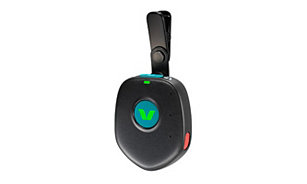
Nurse call systems and other third-party alert systems can send messages directly to the appropriate care giver through the Vocera Messaging Interface (VMI) software module. VMI can be used to interface the Vocera Communications System with applications such as nurse call systems and clinical system alerts and alarms. For example, a message sent from a bedside call system can be interfaced to Vocera to trigger alerts and send text messages directly to the appropriate Vocera Badge user allowing the user to immediately address the patient's needs or escalate the call as necessary.

Integration with the Vocera Communications System via the VMI allows customers to extend the capabilities of their existing systems, such as HVAC, security alerts, patient monitoring, and nurse call systems. The VMI can be configured for one-way or two-way messaging, depending on the capability of the application being integrated.

Related

Emergin Healthcare Case Study - Abbott Northwestern's Heart Hospital

Vocera Clinical Applications

Technology's Role in Addressing Maryland's Nursing Shortage: Innovations & Examples, Maryland Statewide Commission on the Crisis in Nursing, January, 2004

The News Review, "Voice Gadgets Aid Mercy Hospital" June 22, 2003

HIPAA Data Security and Privacy Standards for Voice Communications Over a Wireless LAN
This white paper addresses compliance issues associated with voice communication over wireless networking technologies within the context of the Health Insurance Portability and Accountability ACT (HIPAA).

Some nurses report they are saving up to 30 minutes per day with the Vocera System. "This means they are spending less time locating staff members or finding resources, and more time attending to patients." Read the complete St. Vincent's Hospital Case Study.

Tim Stettheimer - CIO of St. Vincent's Hospital, Birmingham, Alabama

"The Vocera System addressed numerous communication and efficiency issues and improved our clinician universe." -Project Analyst, Clinical Information Systems
UC Davis Medical Center


Watch Demo Video

Related Links
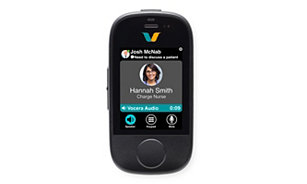
» System Data Sheet » B2000 Badge Data Sheet » T1000 Phone Product Brief » Find a Reseller » Contact Us
Home  |  About  |  Legal  |  Careers  |  Privacy  |  Site Map  |   Contact Us © 2008 Vocera Communications. All rights reserved. Use of this website signifies your agreement to the acceptable use policy.